TMS Therapy: A Breakthrough Treatment for Depression at Core Self
TMS Therapy
If you or someone you love has been struggling with depression and hasn’t found relief with medications alone, you’re not alone—and there are other options.
At Core Self, we offer Transcranial Magnetic Stimulation (TMS), an evidence-based, non-invasive treatment that helps individuals with treatment-resistant depression feel like themselves again.
Let’s walk through what TMS is, how it works, and who it might help.
What Is TMS Therapy?
Transcranial Magnetic Stimulation (TMS) is an FDA-approved treatment for depression that uses gentle magnetic pulses to stimulate areas of the brain involved in mood regulation.
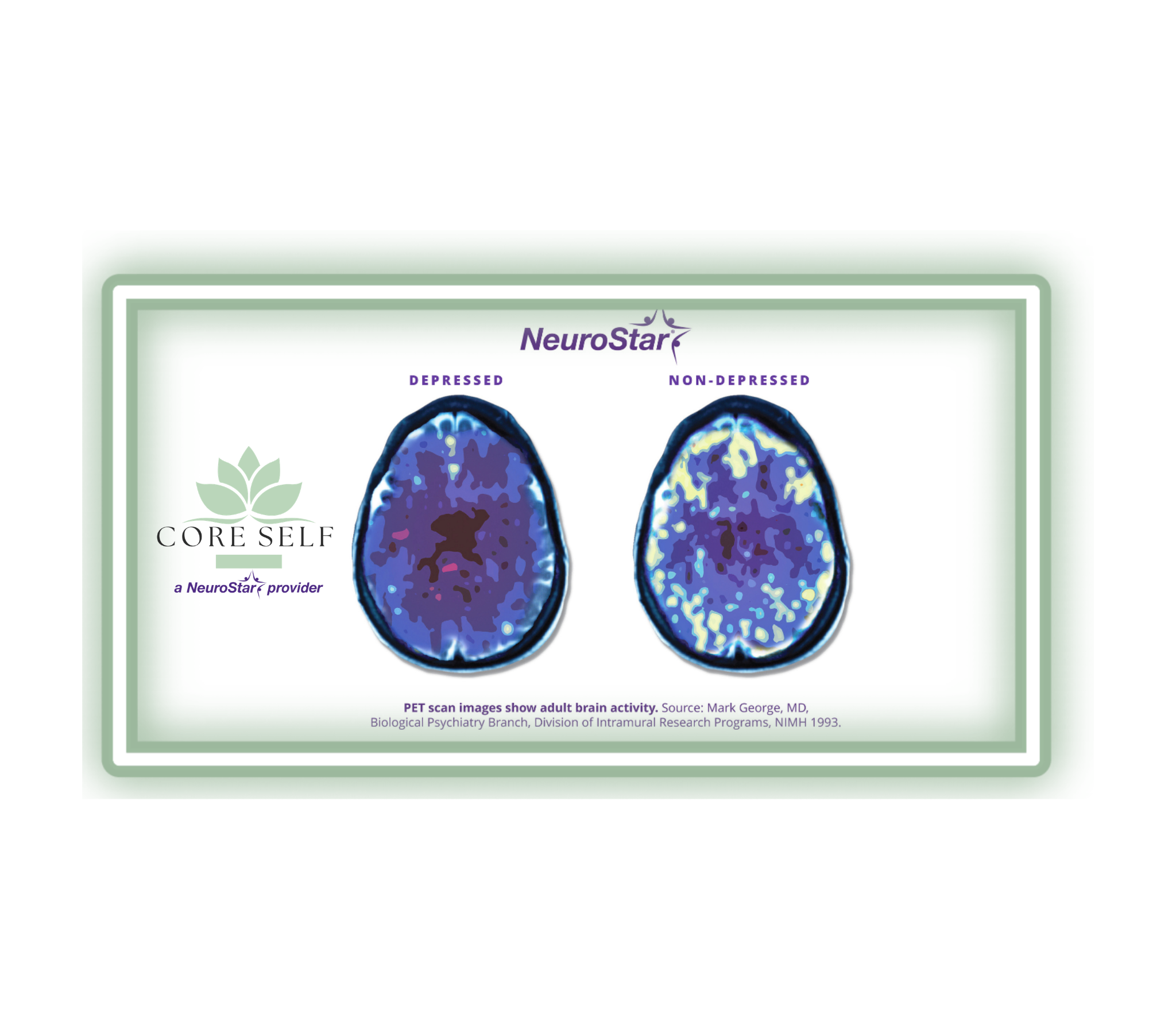
Unlike medications that affect the whole body, TMS is targeted directly at the brain, specifically the prefrontal cortex—the area often underactive in people with depression.
This means:
No systemic side effects like weight gain or fatigue
No need for anesthesia
No downtime after treatment
You can literally come in for a session and go right back to your day.
How Does TMS Work?
Depression is not just a chemical imbalance—it’s also related to how different parts of the brain communicate.
TMS helps by:
Activating under-functioning areas of the brain
Improving neural connectivity
Supporting healthier brain patterns over time
Think of it as “jumpstarting” the brain’s natural ability to regulate mood.
Treatments are typically:
5 days per week
About 20 minutes per session
Over 6–8 weeks
At Core Self, we carefully map your brain to personalize your treatment and ensure the most effective outcomes.
Who Is TMS For?
TMS is a great option for individuals who:
Have tried antidepressants without enough relief
Experience unwanted side effects from medications
Prefer a non-medication treatment approach
Want to enhance their current treatment plan
We often recommend TMS as part of a comprehensive, integrative approach, which may include therapy, lifestyle changes, and nervous system regulation work.
What Does TMS Feel Like?
This is one of the most common questions—and understandably so.
During treatment, you may feel:
A tapping sensation on the scalp
Mild discomfort at first (which usually improves quickly)
Most clients describe it as strange but very tolerable, and many adjust within the first few sessions.
What Results Can You Expect?
Many individuals begin to notice:
Improved mood
Increased motivation
Better focus and clarity
Reduced anxiety
For some, changes start within a few weeks. For others, it builds gradually over the course of treatment.
Our goal at Core Self is not just symptom relief—but helping you reconnect with yourself.
Why Choose Core Self for TMS?
At Core Self, we do things differently.
We don’t just treat symptoms—we look at the whole person.
Your care may include:
Medication management (when appropriate)
Therapy collaboration (including EMDR)
Functional and integrative approaches
Nervous system support and education
We believe the best outcomes happen when brain, body, and environment are all supported together.
Is TMS Covered by Insurance?
Many insurance plans cover TMS for treatment-resistant depression. Our team will help:
Verify your benefits
Walk you through your options
Advocate for coverage when possible
We also offer guidance for private pay options if needed.
Ready to Take the Next Step?
If you’ve been feeling stuck, discouraged, or like nothing has worked—you’re not out of options.
TMS might be the next step forward.
👉 Schedule a consultation with our team at Core Self to see if TMS is right for you.
Final Thoughts
Depression can feel isolating—but healing doesn’t have to be.
At Core Self, we’re here to help you understand your brain, support your nervous system, and find a path that actually works for you.
